
Why Performance Textile Technology Is Becoming a Budgetary Imperative for Hotels

Hotels are currently facing challenges due to rising operating costs, uncertainty around tariffs, increased guest sensitivity to fees, and declining satisfaction scores. In this context, capital decisions that used to be handled within procurement departments, such as selecting bedding wholesale suppliers and other textile partners, are now recognized as vital financial strategies. Performance textile technology, specifically designed for the laundering of commercial hospitality items, is evolving beyond being merely a sustainability initiative or a quality improvement. It is now an essential tool for protecting profit margins, minimizing environmental impact, and stabilizing budgets in a fluctuating market.
The Cost Squeeze: Why "Hidden" Operational Expenses Matter More Than Ever
Hotels experience a distinct set of pressures. Recently, visitor numbers have fluctuated significantly, with occupancy rates, Average Daily Rate (ADR), and Revenue Per Available Room (RevPAR) declining year over year, especially on the Strip. In response, operators have increasingly relied on resort fees, parking charges, and service surcharges to sustain revenue. However, this strategy has led to growing frustration among guests, negatively affecting their satisfaction and online sentiment.
Layered on top of this is tariff uncertainty, which has directly affected the cost of imported hospitality essentials such as linens, towels, and uniforms. Industry analysts note that tariffs on textile‑producing regions in Southeast Asia have increased acquisition costs while reducing predictability in long‑term purchasing contracts, especially for mid‑scale and independent properties without bulk‑buying power.
In this environment, hotels are being forced to look beyond headline pricing and evaluate the total cost of ownership (TCO) across all operational categories including textiles.
Cost per Use: The Financial Metric That Changes the Textile Conversation
Traditional linen purchasing often focuses on unit cost: the price per sheet or towel. Performance textile technology reframes the conversation around cost per use, a metric driven by durability under commercial laundering conditions.
Hospitality textiles are washed hundreds of times per year under high heat, aggressive chemistry, and mechanical stress. Research shows that premium, performance‑engineered sheets and towels can last 18–36 months, compared to 6–12 months for lower‑quality alternatives, significantly reducing annual replacement volume.
When evaluated over their usable life, higher‑performance textiles often deliver lower cost per occupied room despite higher upfront pricing. Fewer replacements mean:
- Lower capital outlay volatility
- Reduced emergency re-orders at peak pricing
- More stable budgeting across fiscal years
This predictability is especially valuable for hotels navigating tariff‑driven price swings.
Laundry Longevity: Where Performance Textiles Multiply Savings
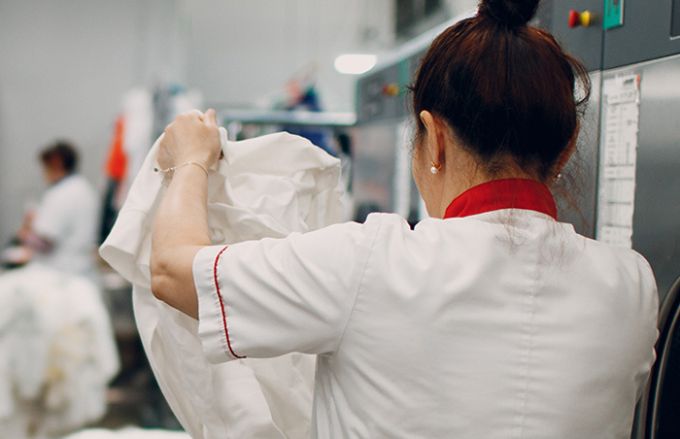
Laundry operations are among the largest controllable cost centers in a hotel. Commercial laundry equipment typically uses 2.5 to 3.5 gallons of water per pound of linen, with energy costs closely tied to drying time and extraction efficiency.
Performance textile technologies, such as reinforced yarns, blended fibers, and engineered weaves, are designed to:
- Resist fiber degradation during high‑temperature washing
- Maintain tensile strength over hundreds of cycles
- Improve moisture release during extraction
These properties help reduce the need for rewashes, decrease drying time, and prevent premature linen failure. As a result, they extend the lifespan of textiles while also lowering utility consumption with each use. Industry sources indicate that textiles designed specifically for industrial laundering sustain less mechanical damage and have lower replacement rates, leading to greater savings over time.
Sustainable Savings: Water and CO₂ Reductions with Real Financial Impact
Sustainability is practical and now essential. Water scarcity in the Southwest and rising utility costs make conservation a financial necessity, not merely a branding exercise.
Hotel laundry operations are among the largest water consumers in the hospitality industry, with industry benchmarks showing that water and wastewater costs can account for over 50% of total laundry operating expenses.
By extending textile life and reducing the number of wash cycles required per room, performance textiles can help hotels:
- Save thousands to millions of gallons of water annually at scale
- Reduce energy consumption tied to heating and drying
- Lower associated CO₂ emissions, particularly in energy‑intensive laundry facilities
Globally, textiles and apparel account for an estimated 8–10% of greenhouse gas emissions, with laundering and processing representing a significant share of their lifecycle impact. Reducing wash frequency and replacement volume directly lowers a hotel’s environmental footprint. For Las Vegas hotels facing increasing scrutiny from investors, regulators, and environmentally conscious guests, these reductions represent measurable, reportable sustainability gains.

Guest Satisfaction: The Quiet Link Between Linens and Perception
As hotels raise fees to offset rising costs, guest tolerance is thinning. Research and media coverage show growing frustration with perceived “nickel‑and‑diming,” making the quality of the in‑room experience more important than ever. Performance textiles help protect satisfaction by:
- Maintaining softness, appearance, and fit over time
- Reducing visible wear, thinning, and discoloration
- Supporting consistent brand standards even as budgets tighten
In an environment where hotels have limited pricing power, protecting the guest experience without increasing operational spend is a competitive advantage.

Why Performance Textile Technology Will Continue to Matter
Looking ahead, most industry forecasts point to modest RevPAR growth, ongoing cost pressure, and continued tariff risk through 2026. Hotels, with their scale and operational intensity, cannot rely solely on revenue strategies to maintain margins.
Performance textile technology offers something rare:
- Immediate operational savings
- Long‑term budget predictability
- Tangible sustainability impact
- Protection of guest satisfaction
In a market defined by uncertainty, textiles designed for durability, efficiency, and sustainability are no longer a discretionary strategy.