
Beyond Disinfection: How Mechanical Cleaning and Process Control Strengthen Infection Prevention

The following is a summary of a recent webinar featuring experts from Vileda Professional and Standard Textile.
Download the slides
Watch the full webinar recording and explore the key takeaways below.
══════════════════
Webinar Quick Facts
Webinar: Beyond Disinfection: How Mechanical Cleaning and Process Control Strengthen Infection Prevention
Date: August 28, 2026
Length: 34 minutes
Featuring: Vileda Professional and Standard Textile
Topics covered: Mechanical cleaning • Microfiber science • Infection prevention • Process control • High-touch surfaces • Color coding • Reusable vs. single-use cleaning products • Performance testing • Auditing • Healthcare cleaning workflows
The quick takeaways
If you take nothing else from the webinar, take these:
- Cleaning should be treated as a patient-safety intervention. Environmental cleaning is one of the areas healthcare organizations can directly influence when addressing healthcare-associated infection risk. That makes the cleaning process an important part of the infection prevention conversation—not simply an EVS budget decision.
- Mechanical removal comes before disinfection. Microfiber is engineered to physically lift, capture, and retain soil and bioburden from surfaces. Reducing that load before applying disinfectant can help create the conditions in which the disinfectant protocol is intended to work.
- Consistency is a process problem, not just a people problem. Even strong cleaning policies can break down during execution because of staffing changes, workload, training gaps, unclear workflows, and inconsistent product use. Standardized, repeatable systems can reduce the amount of judgment and decision-making required during a shift.
- A room can look clean without the process being controlled. Visual inspection has value, but it does not tell the entire story. Facilities can use objective methods such as ATP testing or fluorescent markers alongside visual checks, while also auditing process behaviors such as product selection, cloth changes, and workflow adherence.
- Color coding can make the intended process easier to follow. A consistent color-coding system can help identify which products belong in particular risk areas and reduce guesswork at the point of care.
- Reusable and single-use products each have a role. There is no universal answer. Many facilities use a hybrid model, selecting reusable or single-use products according to the application, risk level, workflow, laundering capabilities, and validated product performance.
- Reusable microfiber depends on appropriate laundering. Microfiber performance can be affected by how products are laundered. A managed laundering process is therefore part of protecting the cleaning performance of reusable products—not simply controlling textile costs.
- Performance claims need context. A statement such as “99.99% removal” is only meaningful when the test methodology, conditions, organism or soil tested, and specific product are understood. Healthcare teams should ask to see the supporting testing data when evaluating cleaning technologies.
- The goal is to audit the process, not just the appearance of the room. The strongest cleaning programs ask not only, “Was the room cleaned?” but also, “Was the cleaning process designed and executed to produce a repeatable result?”
About the experts
The webinar, moderated by Fred Cecala, brought together experts in clinical practice, textile science, contamination control, and healthcare cleaning-system implementation.
Fred Cecala — Senior Global Applications Manager, Vileda Professional
Fred brings real-time strategic thinking and creative problem solving to contamination-control challenges worldwide. A mechanical cleaning and contamination-control expert, he is a voting member and active participant in guidance-document development for IEST and PDA, and a professional member of ISSA, AHE, and APIC. His business and product-development expertise includes more than 30 U.S. patents granted.
Sheila McNally, BSN, RN, WCC®, CPSN-R, CNOR(E), RNFA — Senior Nurse Consultant, Standard Textile
Sheila is a Bachelor of Science in Nursing-prepared Registered Nurse with certifications in Wound Care (WCC®), Plastic Surgery Nursing (CPSN-R), Operating Room Nursing (CNOR Emeritus), and Registered Nurse First Assisting (RNFA). Her credentials reflect specialized expertise in wound management, perioperative care, plastic and reconstructive surgery, and operative first-assist practice. As a Senior Nurse Consultant and certified wound care nurse at Standard Textile, Sheila collaborates with healthcare laundries and clinical teams to advance quality, education, and the successful adoption of reusable healthcare products.
Sara Broadaway, PhD — Director of Research, Standard Textile
Sara leads innovation programs focused on infection prevention and healthcare performance products. With expertise in advanced textiles, finishing, nonwovens, and antimicrobial performance, she has helped develop products designed to support safer and more comfortable healthcare environments.
John Selfslaghs — Sales Manager, Vileda Professional
John brings more than 30 years of industry experience to his work with healthcare facilities, helping organizations evaluate cleaning systems and implement solutions suited to their operational needs. His experience spans professional cleaning applications, product selection, workflow, and facility-level implementation.
Why physical removal, standardized workflows, and evidence-based cleaning systems matter in healthcare environments
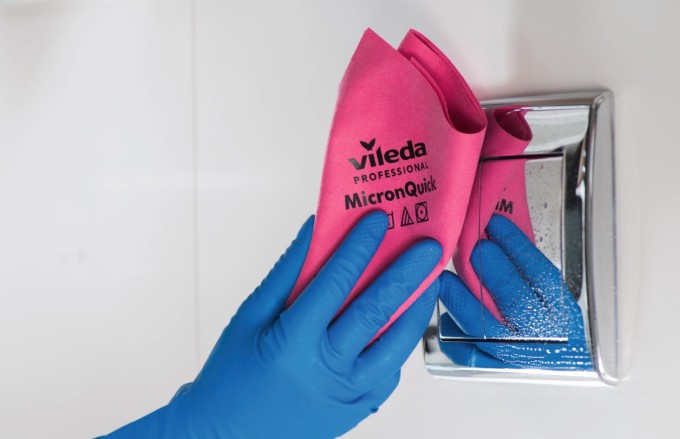
In healthcare, environmental cleaning is an important part of infection prevention and patient safety. Effective cleaning goes beyond disinfection alone, combining mechanical removal, microfiber technology, standardized workflows, and evidence-based process control to create more consistent cleaning outcomes.
That was the central message of a recent webinar featuring experts from Vileda Professional and Standard Textile. The discussion explored what happens at the surface level when microfiber physically removes soil and bioburden, why consistent cleaning processes matter, and how healthcare facilities can move beyond simply asking whether a room looks clean.
The conversation brought together clinical, textile, and facility perspectives to examine a bigger question: Is your cleaning process designed to deliver a consistent, repeatable result?
The webinar covered mechanical cleaning, microfiber technology, process standardization, color coding, reusable versus single-use products, performance testing, auditing, and the role of cleaning decisions in infection prevention.
Healthcare Environmental Cleaning: From “Clean” to “Hygienically Clean”
One of the most important distinctions discussed during the webinar was the difference between a space that looks clean and a process that is designed to achieve hygienic cleaning consistently.
Sheila McNally explained that environmental cleaning is one of the healthcare-associated infection risk factors facilities can directly influence. That gives infection prevention teams an opportunity to become more involved in cleaning decisions and help shape processes that reduce transmission risk.
The challenge is that written protocols do not always translate perfectly to day-to-day execution.
Different shifts may have different staffing levels. Workloads change. Employees may interpret procedures differently. Supplies may not be prepared consistently. And cleaning materials can unintentionally move contamination from one room or surface to another when they are reused incorrectly.
That makes standardization and execution critical.
Rather than relying on staff to remember every decision at the point of care, facilities can build consistency into the system itself.
What actually happens when microfiber cleans a surface?
According to Sara Broadaway, the science starts with the structure of the microfiber itself.
Microfiber products are engineered by splitting larger fibers into much finer structures. Those fine, wedge-shaped fibers create greater surface area and can reach into microscopic irregularities on a surface.
As the cloth moves across the surface, those fibers help lift and capture soil and bioburden, retaining the material within the textile rather than simply moving it around.
This is an important distinction between mechanical cleaning and relying on chemical action alone.
The purpose of mechanical cleaning is to physically remove contamination from the surface.
Vileda Professional similarly describes its microfiber approach as a mechanical cleaning system designed to improve biocontamination pickup and residue removal in healthcare environments.
Why physical removal matters before disinfection
Disinfectants are tested and validated under defined conditions. As Sheila explained during the discussion, those conditions generally assume a reasonably clean starting surface and require the product to achieve the specified contact time.
A heavy soil or bioburden load can interfere with the process.
That is why mechanical removal is an important first step: it helps reduce the amount of material present on the surface before the disinfectant is asked to perform its intended function.
The webinar’s message was not that chemistry is unimportant. Rather, cleaning and disinfection work together.
Mechanical cleaning physically removes contamination.
Disinfection then addresses microorganisms according to the requirements of the specific disinfectant and protocol.
The combination creates a more controlled sequence than relying on chemical exposure alone.
Process control: removing memory and guesswork from cleaning
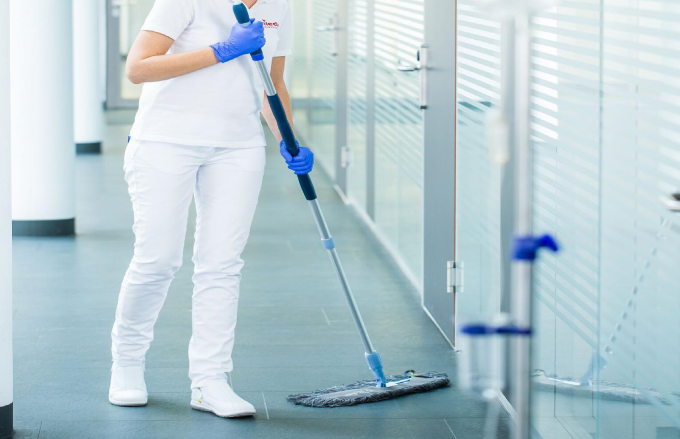
One recurring theme throughout the webinar was that healthcare cleaning should be designed around the realities of the people performing the work.
A process that requires staff to make repeated decisions during a busy shift introduces opportunities for variation.
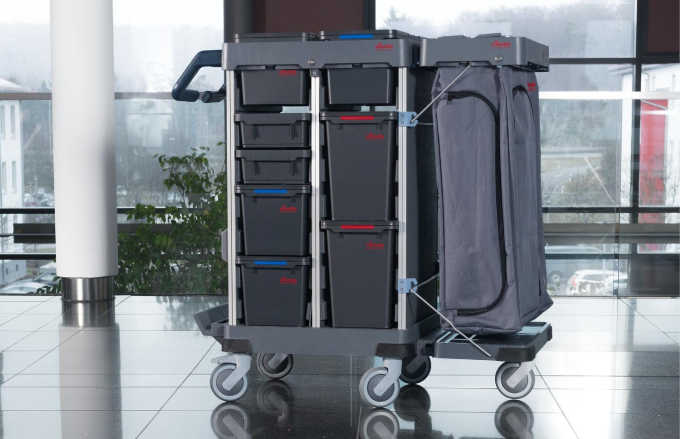
Pre-prepared cleaning products can reduce some of that variability by establishing the intended preparation before cleaning begins. Color coding can provide another visual cue, helping staff identify which product belongs in a given area.
The objective is not simply to make cleaning easier.
It is to make the correct process easier to repeat.
A standardized approach can also help infection prevention teams evaluate whether the intended process is actually being followed.
Instead of only asking whether a room appears clean, the facility can ask:
- Was the correct product used?
- Was the correct product used in the correct area?
- Were materials changed according to the protocol?
- Were clean and used materials kept separated?
- Was the product prepared and dosed correctly?
- Was the workflow followed consistently?
Those questions create much greater visibility into the process itself.
High-touch surfaces: the places that are easy to miss
The webinar also explored which high-touch surfaces may be overlooked during patient-room cleaning.
Among the poll responses were call buttons, television remotes, door handles, and light switches.
These surfaces can be easy to miss precisely because they are not always the first objects people associate with patient-room cleaning. Yet they can be touched repeatedly by patients, family members, nurses, environmental services staff, and others.
Sara Broadaway noted that one way to make more time for these surfaces is to streamline the overall cleaning system.
Saving seconds in preparation, product selection, dosing, or other repetitive steps can create more time and attention for the surfaces that might otherwise be skipped.
That is where system design becomes part of infection prevention.
How should facilities evaluate “99.9%” and “99.99%” claims?
Performance numbers can sound impressive on their own, but the webinar emphasized that a percentage without context is not enough.
When evaluating a cleaning product or system, healthcare teams should ask:
- Under what conditions was the product tested?
- What test method was used?
- What organism, soil, or contaminant was evaluated?
- Which specific product or product combination was tested?
- Was a disinfectant used during the test?
The panel discussed third-party testing supporting microorganism-removal claims for selected Vileda Professional reusable and single-use products. The presenters emphasized that the supporting methodology and data should be reviewed rather than relying on a headline number alone.
That information can also be useful during value-analysis and infection prevention committee discussions.
For infection prevention teams, the takeaway is straightforward: treat cleaning-performance evidence as technical evidence that needs to be evaluated in context, not simply as a marketing statistic.
Reusable vs. single-use: there is no one-size-fits-all answer
Another practical question addressed during the webinar was whether healthcare facilities should choose reusable or single-use cleaning products.
The answer depends on the facility and the application.
Reusable products can provide an economical solution over their useful life when they are properly laundered and managed.
Single-use products provide a fresh product for each application and eliminate the need for laundering and the associated logistics.
Many healthcare facilities use a hybrid model, selecting the format that best fits a particular environment.
Higher-risk applications, isolation settings, outbreak situations, certain operating-room environments, or facilities without reliable laundering capabilities may create different needs from lower-risk areas.
The decision should be based on factors including:
- Patient and environmental risk
- Validated product performance
- Workflow
- Reprocessing and laundering capabilities
- Facility-specific infection prevention priorities
The panel emphasized that the decision should not be driven solely by tradition or the initial purchase price.
Why laundering matters for reusable microfiber
Choosing reusable microfiber also means taking responsibility for the laundering process.
Sara Broadaway explained that microfiber relies on its engineered structure for cleaning performance and that improper laundering can degrade that structure over time.
That makes the laundry process part of the overall cleaning system.
A reusable product is only delivering the value of its engineered performance if it is being properly processed, maintained, and returned to service.
In other words, the question is not simply:
“How much does this product cost?”
It is also:
“What process is required to preserve the performance we are paying for?”
What Should a Healthcare Environmental Cleaning Audit Measure?
A strong cleaning program cannot rely exclusively on visual inspection.
As Sheila explained, a room can look clean while the cleaning process itself may not have been performed correctly.
Facilities can supplement visual inspections with objective methods such as ATP testing and fluorescent markers.
But process auditing should go further.
For example, teams can evaluate whether the correct cloth was used, whether materials were changed appropriately, whether clean and used products were separated, and whether the intended workflow was followed.
This shifts the conversation from:
“Did cleaning happen?”
to:
“Was the cleaning process designed and executed to produce a repeatable result?”
That distinction is at the heart of process control.
Four pillars of a stronger cleaning system
The webinar concluded with four themes that bring the discussion together:
- Mechanical removal: Physically removing soil and bioburden is a foundational part of the cleaning process.
- Process control: A well-designed workflow can reduce variation, minimize guesswork, and make the intended process easier to repeat.
- Protocol flexibility: Different areas of a healthcare facility may require different products, workflows, or cleaning formats. The system needs to adapt to the application rather than forcing every environment into one identical solution.
- Evidence: Cleaning decisions should be supported by relevant testing, data, risk assessment, and real-world process evaluation.
Together, these pillars support a more systematic approach to environmental cleaning.
The bigger takeaway
The most important shift may be a simple change in the question healthcare teams ask.
Instead of asking:
“Did we clean the room?”
Ask:
“Did we design and execute a cleaning process that can reliably deliver the intended result?”
That shift places cleaning where the webinar argued it belongs: within the broader infection prevention and patient-safety conversation.
It also creates an opportunity for EVS leaders, infection preventionists, clinical teams, and suppliers to work together on systems—not simply individual products.
Continue the conversation
This webinar is the first session in a broader educational series on mechanical cleaning and infection prevention.
The next sessions take a deeper look at specific healthcare applications, including floors and high-touch surfaces, as well as workflow, trolleys, and specialized environments such as the operating room.
For facilities evaluating their current cleaning processes, the webinar also provides a useful starting point:
- What are you measuring beyond visual cleanliness?
- How consistent is your process from shift to shift?
- Are your products and workflows matched to the risk level of each area?
- Can your team demonstrate that product-performance claims are supported by relevant testing?
- Is your reusable-product laundering process protecting the performance of the textile?
Those questions can help turn infection prevention from a policy exercise into a measurable, repeatable cleaning system.
Interested in learning more about mechanical cleaning and infection prevention?
Contact your Standard Textile representative to discuss your facility’s cleaning workflow, product needs, testing data, and potential pilot opportunities.